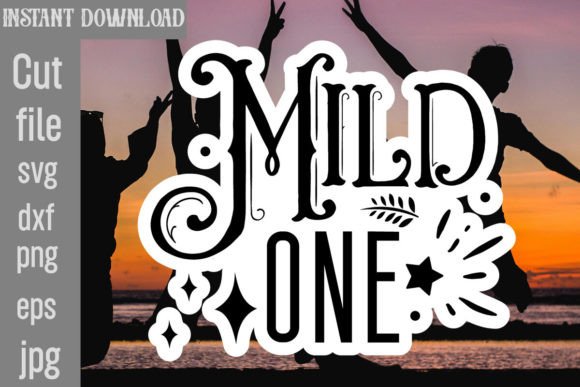
Reviewing Mild One SVG Cut File for Real Embroidery
As a designer who has spent years turning digital graphics into tangible, stitched products, I approach every new file with a mix of excitement and skepticism. The market is flooded with Mild One SVG Cut File options that look perfect on a screen but fall apart under the needle. Today, I am evaluating this specific design not just as a Graphics asset, but as a potential hero for a real-world embroidery project. My goal is to determine if it holds up when moved from a vector editor to a hoop, and whether it can drive sales for an Etsy seller or a boutique brand.
First Impressions: Mood and Visual Personality
When I first opened the Mild One SVG Cut File, the aesthetic was immediately clear. It carries a calm, understated energy that fits perfectly within the current trend of minimalist decor and subtle branding. The lines are clean, and the shape suggests a design that relies on negative space rather than overwhelming detail. For a machine embroidery design, this is often a blessing. Complex vectors with tiny serifs or intricate cross-hatching often result in thread bunching or missed stitches. This file appears to prioritize bold, simple contours, which usually translates well to both satin stitch outlines and fill stitch areas.
The visual personality feels versatile. It doesn't scream "holiday" or "seasonal," which means it could work year-round. Whether you are planning a personalized gift for a baby shower or creating stock inventory for a craft business, the neutral vibe allows the fabric color and thread choice to dictate the final mood. However, simplicity requires precision. If the vector paths in the Mild One SVG Cut File are not perfectly closed, you risk gaps in your stitching that can ruin the professional finish of a finished product.
A Real-World Scenario: The Custom Tote Bag Project
To truly test this design, let's imagine a specific use case. I am preparing a line of organic cotton tote bags for a local farmers' market. These bags need to feel premium yet durable, and the embroidery must withstand frequent washing without losing definition. I decide to use the Mild One SVG Cut File centered on the front panel.
In my mind's eye, I see the design rendered in a soft sage green thread against the natural beige canvas. Because the design is relatively compact, it won't overwhelm the bag's surface area, leaving room for a small logo or date stamp if needed. The challenge here is the fabric texture. Canvas is thick and textured, which can sometimes obscure fine details in an embroidery file. Since the Mild One SVG Cut File seems to feature broader shapes, it should handle the weave of the canvas better than a script-heavy design would.
If I were to place this same design on a sweatshirt embroidery project, the dynamic changes slightly. Sweatshirts have a looped pile that can cause thread to sink in. Here, the stitch density becomes critical. If the file is too sparse, the loops of the fleece might show through the gaps between stitches. Conversely, if the density is too high, the fabric will pucker, ruining the drape of the garment. As a reviewer, I would advise testing this on a scrap piece of fleece first to ensure the hoop size accommodates the design without distorting the fabric.
Navigating Technical Challenges and Fabric Types
While the Mild One SVG Cut File looks promising, experienced decorators know that no design works universally without adjustments. There are specific scenarios where caution is required. First, consider small hoop sizes. If you attempt to fit this design into a 4x4 inch hoop for a cap or a small patch, you may find that the details get compressed. Always check the dimensions before committing to a custom apparel order.
Texture is another major factor. On textured fabrics like linen or heavy denim, the design needs enough fill stitch to sit on top of the fibers. On thin or stretchy fabrics, such as jersey knit t-shirts, the design requires a strong stabilizer to prevent distortion. If the Mild One SVG Cut File includes long satin columns, they might pull the fabric if the stabilizer isn't adequate. Similarly, on dark fabrics, the contrast of the thread becomes the most important element. A light gray thread on black fabric might make the design invisible, so choosing the right thread colors is essential for visibility and impact.
Curved surfaces, like those found on baseball caps, present their own set of problems. Flat designs often struggle to conform to the curve of a brim or the dome of a hat. If the Mild One SVG Cut File has sharp corners, they might lift off the curved surface unless properly anchored. This is a common pitfall for embroidered patch makers working with limited equipment. Always visualize how the flat vector will behave in three dimensions.
Impact on Brand Value and Customer Trust
For a small shop product or a handmade brand, the quality of your design directly influences customer trust. A clean, well-executed version of the Mild One SVG Cut File signals professionalism. It tells the buyer that you care about details, from the alignment of the stitch to the choice of thread. In the world of commercial embroidery, consistency is key. If you sell this design on multiple items—tote bag design, aprons, pillow covers—it creates a cohesive brand identity.
However, if the design is poorly digitized or applied incorrectly, it can damage your reputation. Customers expect their personalized gifts to look exactly like the mockup. If the stitch density causes puckering or the edges are frayed, the perceived value drops instantly. Using a high-quality digital embroidery file like this one gives you a head start, but it is up to the maker to execute it flawlessly. The design assets provided in the zip file are tools; your skill determines the outcome.
Practical Designer Notes Before You Stitch
Before you integrate the Mild One SVG Cut File into your workflow, follow these practical steps to ensure success:
- Test on Scrap Fabric: Never skip the test run. Stitch the design on the exact fabric and stabilizer you plan to use for the final product.
- Check Thread Contrast: Ensure the thread colors stand out against the background. What looks good on a white screen might disappear on heather gray.
- Verify Hoop Size: Confirm that the design fits comfortably within your hoop with a margin for error. Do not push the limits of your machine's capacity.
- Inspect Small Details: Zoom in on the vector to check for any stray points or open paths that could cause stitching errors.
- Mockup in Black and White: Sometimes, seeing the design without color helps you judge the balance of the composition and the clarity of the lines.
- Confirm Licensing: Remember that the download includes files for Cricut, Silhouette, and general vector use. Check the license terms regarding selling finished goods versus reselling the digital file itself.
The Mild One SVG Cut File offers a solid foundation for various Crafts projects, from baby embroidery to holiday embroidery accents. Its versatility makes it a valuable addition to a designer's library, provided it is handled with care. By understanding its strengths and limitations, you can create beautiful, high-value items that customers will love and return to buy again. Whether you are a hobbyist making a kitchen towel for a friend or an entrepreneur scaling a craft business, this design has the potential to be a standout piece in your portfolio.